Examples advices for young graduates
Landing your first job after university can feel overwhelming. Recruiters in the UK often scan a graduate CV in just a few seconds, so your young graduate CV needs a clear, professional layout that shows your potential – even if you have little or no work experience.
What is a Graduate CV?
A graduate CV is a CV written for students in their final year or recent university graduates who are starting their career. Unlike a student CV, which often focuses on part-time jobs and ongoing studies, a graduate CV is designed to present you as a future young professional ready for the job market, even if you only have limited work experience.
In practical terms, your graduate CV should highlight your degree, key modules, dissertation or final-year project, internships, placements and any experience that shows your transferable skills. Employers use a graduate CV to see your potential: how you communicate, solve problems, work in a team and adapt to a professional environment.
You will typically need a graduate CV when you apply for:
- Entry-level roles and junior positions in the UK
- Graduate schemes and graduate programmes
- Internships and industrial placements after university
- Your first full-time job after completing your degree
If you are finishing university or have recently graduated and you’re targeting your first job, an entry-level role or a competitive graduate scheme, you should use a dedicated graduate CV rather than reusing an old student CV. This will help you match employer expectations and increase your chances of being shortlisted.
How to structure a Graduate CV (UK format)
Before you start writing, it’s important to decide on a clear graduate CV structure. A well-organised CV layout makes it easier for recruiters and ATS (Applicant Tracking Systems) to scan your profile quickly and spot your most relevant skills, education and experience for the UK job market.
Recommended layout and length
For most candidates, a graduate CV should be a one-page CV. If you have several internships, an industrial placement or a lot of relevant academic projects, you can go up to two pages, but never more. Recruiters expect a concise, easy-to-read document that highlights your potential for an entry-level role.
Use a simple professional CV layout: clear headings, consistent fonts, enough white space and bullet points rather than long paragraphs. Stick to a reverse-chronological format, starting with your most recent education and experience. Avoid complicated graphics or heavy design elements that could cause issues with ATS-friendly CV screening.
Essential sections on a graduate CV
A strong graduate CV should include the following key sections:
- Contact details
- Personal statement (or personal profile)
- Education
- Work experience
- Skills
- Additional sections
By keeping this graduate CV structure and layout, you make it easier for recruiters to see why you are a strong fit for a graduate scheme or entry-level role, even with limited professional experience.
How to write each section of your Graduate CV?
Each section has a clear role: together, they show that you are ready for the UK job market, even with limited experience. Use the tips below as a quick guide, then adapt the examples to your own profile.
Contact details: start your graduate CV the right way
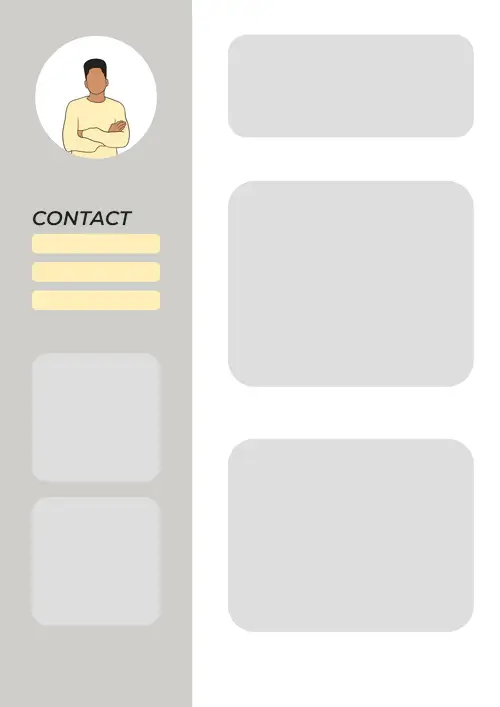
Your contact details should be simple, professional and easy to find at the top of the page. Use a professional email address, add your city in the UK and, if relevant, a link to your LinkedIn profile or online portfolio.
- Do: Use a clear layout with your name, phone, email, city and LinkedIn.
- Avoid: Adding a photo, date of birth, full postal address or casual email.
- Emily Johnson
- Manchester, United Kingdom
- +44 7700 900123
- mail@example.com
- LinkedIn: linkedin.com/in/linkedin
Personal statement for a young graduate
The personal statement is a short introduction that explains who you are, what you offer and what type of graduate role you are seeking. It should be specific, targeted and supported by concrete elements from your degree or experience.
- Do: Mention your degree, key strengths and target role in 3–4 lines.
- Avoid: Generic clichés like “hard-working and motivated” with no evidence.
Business and Marketing graduate with a 2:1 from the University of Leeds, seeking an entry-level Marketing Assistant role in a fast-paced agency. Experienced in social media campaigns, market research and data analysis through internships and university projects. Strong communication skills, attention to detail and a proven ability to work to tight deadlines.

How to list your education on a graduate CV
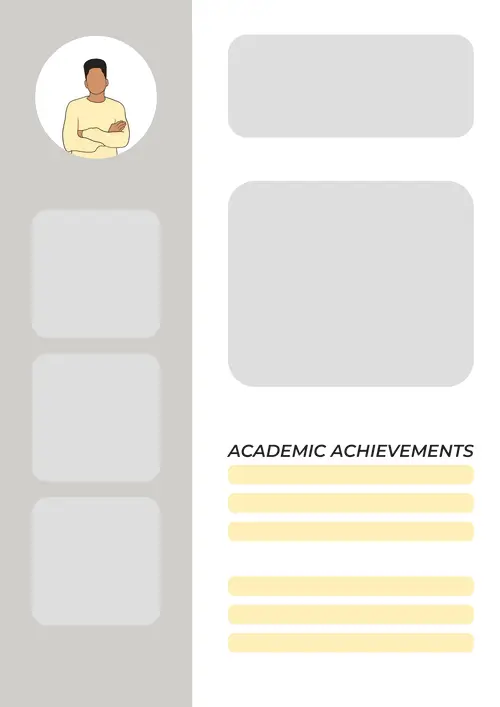
For a young graduate, education is often the strongest part of the CV. Highlight your degree, university, dates, degree classification, key modules and final-year project, focusing on what is most relevant to the roles you are applying for.
- Do: Emphasise key modules, projects and results linked to your target job.
- Avoid: Listing every single module or technical detail from your syllabus.
BSc (Hons) Computer Science – 2:1
University of Manchester, 2021-2024
Key modules: Software Engineering, Data Structures and Algorithms, Databases, Machine Learning
Work experience, internships and placements
Work experience includes internships, placements, part-time jobs and volunteering. Even if the role is not directly related to your field, show the responsibilities you took and the skills you developed using clear, action-based bullet points.
- Do: Focus on achievements, responsibilities and skills that employers value.
- Avoid: Copying your job description or only listing basic routine tasks.
Marketing Intern, Bright Ideas Agency, London
June 2023 – August 2023
- Assisted with social media content planning and scheduled weekly posts across LinkedIn, Instagram and X (Twitter).
- Conducted competitor research and presented insights to the senior marketing team.
- Helped optimise email campaigns, contributing to a 12% increase in click-through rate.

Skills: highlight your transferable skills
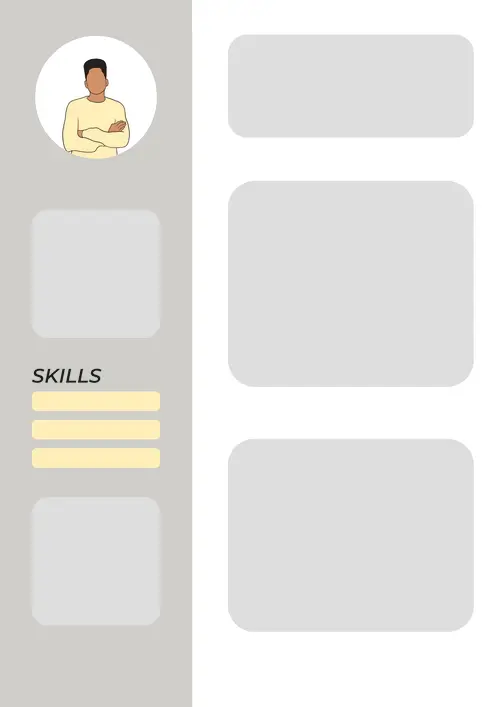
The skills section should combine technical abilities and transferable skills. Choose skills that match the job description and support them with evidence from your studies, projects, jobs or extracurricular activities.
- Do: Align your skills with the job ad and give proof elsewhere on your CV.
- Avoid: Long lists of vague skills like “communication” with no context.
- Communication: Delivered group presentations at university and presented findings to managers during my internship.
- Teamwork: Worked in cross-functional teams on academic projects and student society events.
- Time management: Balanced full-time studies with a part-time job and volunteering activities.
- IT skills: Confident using Excel, PowerPoint and basic data analysis tools.
- Languages: English (native), French (intermediate).
Hobbies and interests (keep it relevant)
Hobbies and interests can add personality to your Graduate CV and support your professional profile when they are relevant. Select a few activities that show qualities useful in the workplace or in your target sector.
- Do: Choose interests that reflect useful traits such as perseverance or creativity.
- Avoid: Long, random lists of hobbies with no link to your application.
- Long-distance running (completed two half-marathons)
- Photography (maintain a small online portfolio)
- Volunteering at local charity events.

Common Graduate CV mistakes (and how to fix them)
Many young graduates have a solid profile but lose impact because of a few recurring CV mistakes. Being aware of them is the quickest way to improve your graduate CV and make it more attractive to UK recruiters.
Too much education detail, not enough impact
One of the most common mistakes is to list every single module studied and technical detail about your degree. Long blocks of academic information make your graduate CV harder to read and hide what really matters: the skills and results you gained. Recruiters are more interested in your key modules, projects and outcomes than in a full syllabus. Focus on the most relevant subjects, your dissertation or final-year project and any measurable results, and keep the rest of the education section concise.
Generic personal statement with no clear value
Another frequent issue is a personal statement full of clichés: hard-working, motivated, passionate, team player, without any evidence or direction. A generic paragraph could fit any candidate and any job, so it does not help you stand out. Your personal statement should clearly state who you are, what type of graduate role you are targeting and what value you bring. Mention your degree, one or two key strengths and a specific type of environment or sector you are aiming for, so the recruiter can immediately understand why you are a good match.
Not tailoring your CV to the job description (and ATS)
Many graduate CVs remain too broad and do not reflect the language of the job description. As a result, they fail to pass basic ATS screening or do not catch the recruiter’s attention. Using vague skills like “good with computers” or “good communication” is not enough. You should adapt your skills and experience to the requirements of each vacancy: reuse relevant keywords from the job ad, highlight the most appropriate projects or internships and place them higher on the page. A tailored graduate CV shows that you understand the role and increases your chances of being shortlisted.
Before sending your application, review your graduate CV with these three points in mind: is your education section focused, is your personal statement specific and is your CV clearly aligned with the job description? If the answer is yes, you are already ahead of many other young graduates.
I’m in, choose my templateKey takeaways to create a successful Graduate CV
Creating a strong graduate CV is less about having years of experience and more about presenting your potential clearly. Use the checklist below to make sure your CV is ready for the UK job market.
- Keep it clear and concise: aim for a one-page CV with a simple, professional layout, clear headings and bullet points rather than long paragraphs.
- Put education and projects first: highlight your degree, key modules and final-year project or dissertation, focusing on what you achieved and the skills you developed.
- Turn experience into evidence: whether it comes from internships, part-time jobs or volunteering, show concrete responsibilities and results instead of generic duties.
- Focus on transferable skills: link your communication, teamwork, problem solving and IT skills directly to the type of graduate role or sector you are targeting.
- Tailor each application: reuse relevant keywords from the job description, adjust your personal statement and move your most relevant experience higher on the page.
Graduate CV FAQs
How is it different from a Student CV?
Should I include a photo on a Graduate CV in the UK?
Can I reuse the same Graduate CV for every application?
How do I write a Graduate CV with no experience?

Ready to create your young graduate CV?
Now that you know how to structure and write a strong Graduate CV, you can choose a template, fill in your details and download your CV in a professional format. Start with a clear layout, adapt it to the job you want and your young graduate CV will be ready to send to UK employers.
Got it – create my CV