CV Creator / CV advice /
How to Write a Graduate CV: UK Guide & Examples
Learn how to write a graduate CV that turns your degree, projects and early experience into a convincing application for UK employers.

Need a professional layout for your graduate CV?
Once your content is ready, use one of these professional layouts or explore our dedicated graduate CV templates.
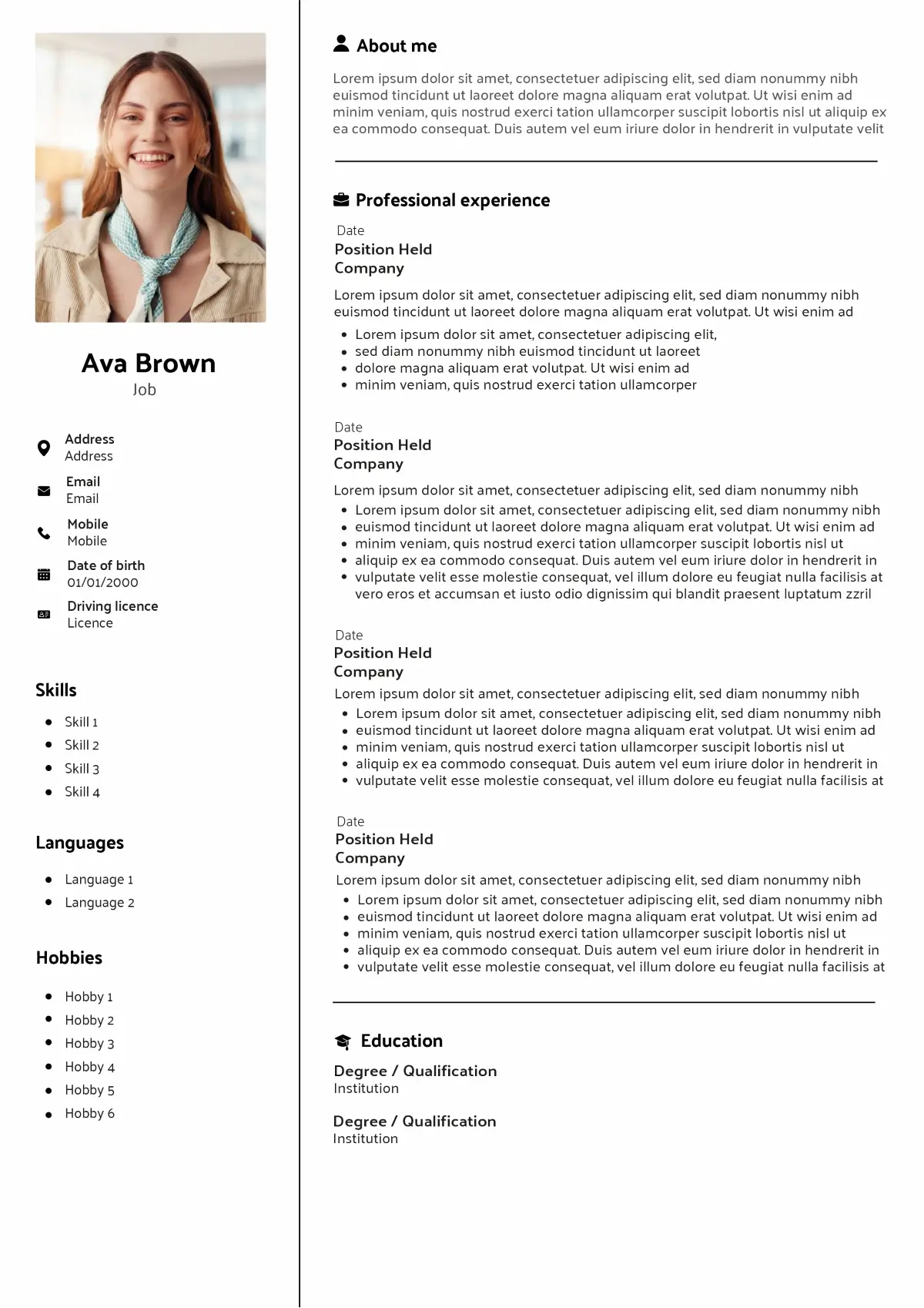
A clear two-column layout that makes your education, skills and early experience easy to scan.
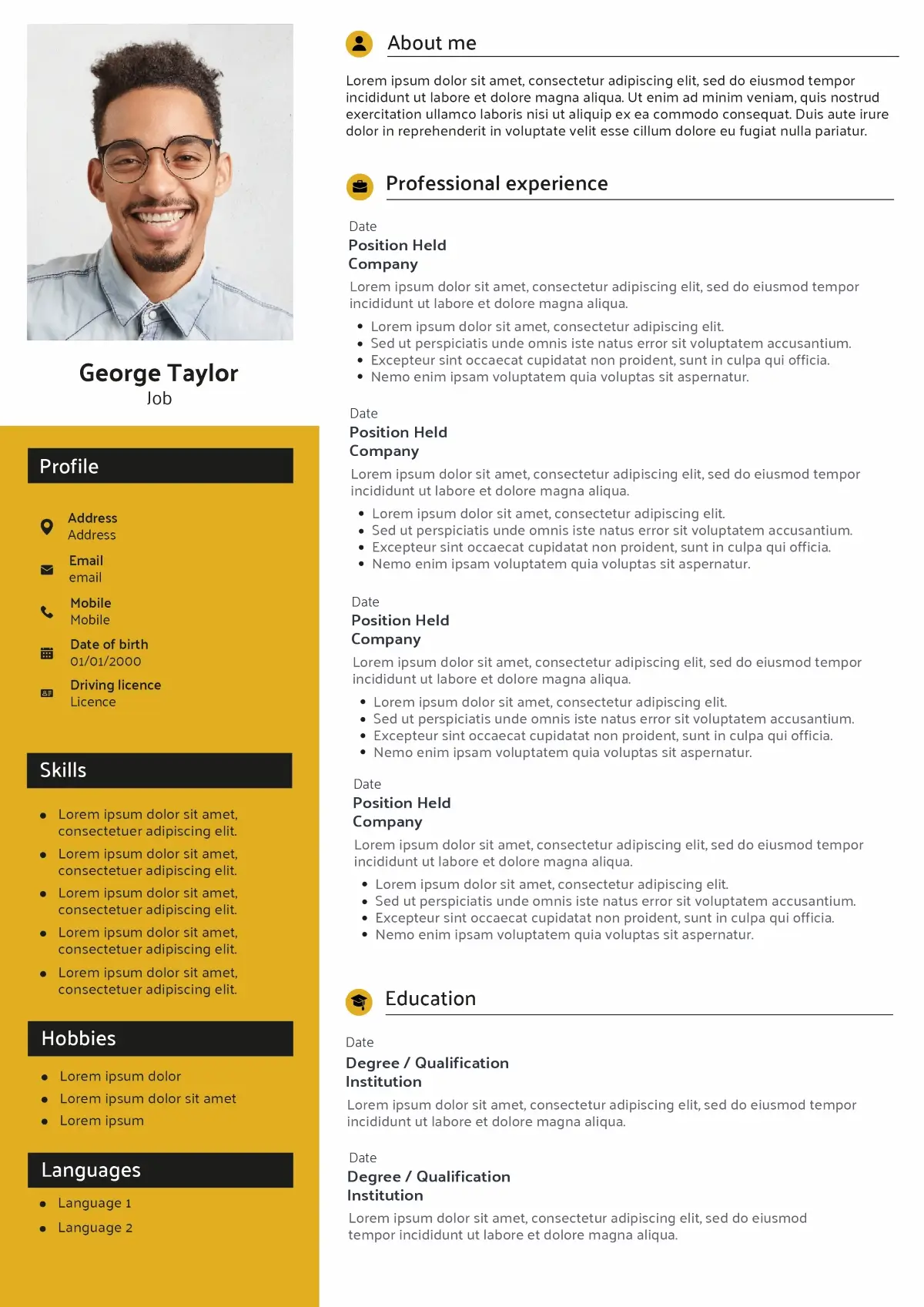
A structured layout that gives your personal statement, skills and education strong visual hierarchy.
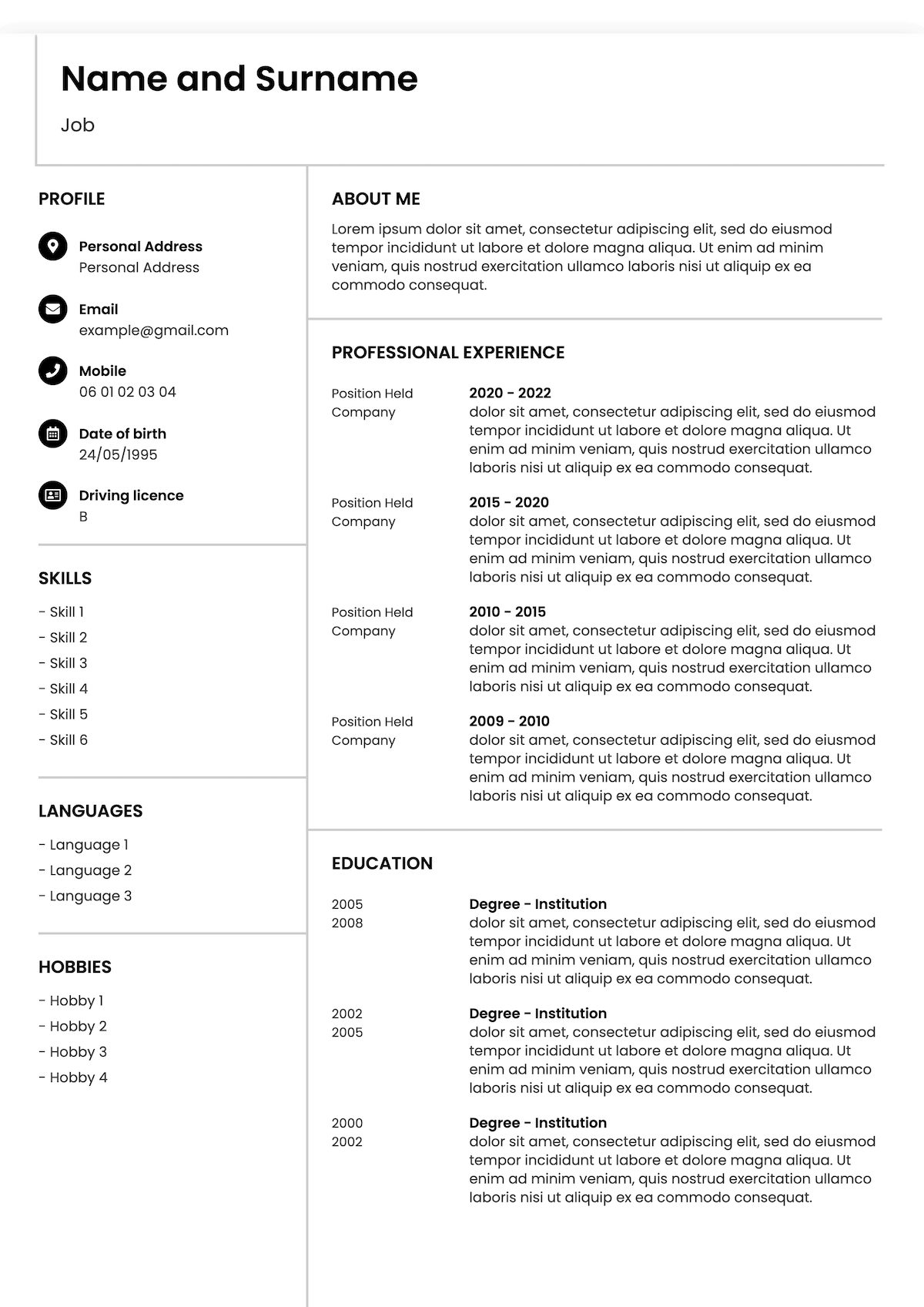
A minimal professional layout designed to keep the focus on your qualifications and experience.
What is a Graduate CV?
A graduate CV is a CV for final-year students and recent university graduates applying for their first professional roles. Its purpose is to show employers that, even without years of experience, you already have relevant knowledge, skills and evidence of your potential.
Your degree matters, but it should not read like an academic record. A strong graduate CV turns modules, projects, internships, placements, part-time work and extracurricular activities into evidence that you are ready to contribute in the workplace.
You will typically use a graduate CV when applying for:
- Entry-level roles and junior positions in the UK
- Graduate schemes and graduate programmes
- Entry-level internships and professional placements
- Your first full-time job after completing your degree
If you are still studying and mainly applying for part-time work or placements alongside your course, see our student CV guidance. If you are moving from university into your professional career, the steps below will show you how to write each part of your graduate CV.
How to structure a Graduate CV for UK jobs
Before writing, decide what the recruiter needs to see first. A clear CV layout helps recruiters and Applicant Tracking Systems scan your application quickly and understand why your background is relevant.
Choose the right order for your experience level
If you have little professional experience, place education before work experience and use your degree, dissertation and academic projects to demonstrate relevant skills. If you completed a strong internship, placement year or relevant job, your experience can come before education because it may be more persuasive for the role.
Keep the document concise and use a simple professional CV layout with clear headings, consistent formatting, white space and short bullet points. One page is often enough for a new graduate, while two pages can be appropriate if you have substantial relevant experience, projects or placements.
Essential sections on a graduate CV
Build your graduate CV around these sections, then adjust their order according to your strongest evidence:
- Contact details
- Personal statement (or personal profile)
- Education
- Work experience
- Skills
- Additional sections
The goal is not to fill every section with as much information as possible. Prioritise the evidence that best matches the vacancy and make the most relevant information easy to find.
How to write a Graduate CV in 6 steps
A strong graduate CV turns education and early experience into clear evidence of what you can offer an employer. Follow these steps and adapt every section to the role you are applying for.
1. Add clear and professional contact details
Your contact details should be simple, professional and easy to find at the top of the page. Use a professional email address, add your city in the UK and, if relevant, a link to your LinkedIn profile or online portfolio.
- Do: Use a clear layout with your name, phone, email, city and LinkedIn.
- Avoid: Adding a photo, date of birth, full postal address or casual email.
- Emily Johnson
- Manchester, United Kingdom
- +44 7700 900123
- mail@example.com
- LinkedIn: linkedin.com/in/linkedin
2. Write a targeted graduate personal statement
Your personal statement should tell the recruiter who you are, what you can offer and what role you want in around 3–4 lines. Start with your degree or specialism, add one or two relevant strengths backed by evidence, then name the type of position or sector you are targeting.
- Do: Mention your degree, key strengths and target role in 3–4 lines.
- Avoid: Generic clichés like “hard-working and motivated” with no evidence.
Business and Marketing graduate with a 2:1 from the University of Leeds, seeking an entry-level Marketing Assistant role in a fast-paced agency. Experienced in social media campaigns, market research and data analysis through internships and university projects. Strong communication skills, attention to detail and a proven ability to work to tight deadlines.

3. Present your education as professional evidence
For many graduates, education is one of the strongest sources of relevant evidence. Include your degree, university, dates and classification, then select only the modules, dissertation topics or projects that support your application. Do not simply describe what you studied: show what you researched, analysed, built, presented or achieved. For more detail, see our guide on how to write the education section on a CV.
- Do: Emphasise key modules, projects and results linked to your target job.
- Avoid: Listing every single module or technical detail from your syllabus.
BSc (Hons) Computer Science – 2:1
University of Manchester, 2021-2024
Key modules: Software Engineering, Data Structures and Algorithms, Databases, Machine Learning
4. Turn work experience into evidence of your skills
Include internships, placements, part-time jobs and volunteering, even when they are not directly related to your target career. Instead of dismissing a retail, hospitality or student job as irrelevant, identify the transferable skills, responsibilities and results that matter to the employer.
No work experience yet? Use university projects, your dissertation, volunteering or student activities to demonstrate skills such as teamwork, analysis, organisation and leadership.
- Do: Focus on achievements, responsibilities and skills that employers value.
- Avoid: Copying your job description or only listing basic routine tasks.
Marketing Intern, Bright Ideas Agency, London
June 2023 – August 2023
- Assisted with social media content planning and scheduled weekly posts across LinkedIn, Instagram and X (Twitter).
- Conducted competitor research and presented insights to the senior marketing team.
- Helped optimise email campaigns, contributing to a 12% increase in click-through rate.

5. Choose skills that match the graduate role
The skills section should combine technical abilities and transferable skills. Choose skills that match the job description and support them with evidence from your studies, projects, jobs or extracurricular activities.
- Do: Align your skills with the job ad and give proof elsewhere on your CV.
- Avoid: Long lists of vague skills like “communication” with no context.
- Communication: Delivered group presentations at university and presented findings to managers during my internship.
- Teamwork: Worked in cross-functional teams on academic projects and student society events.
- Time management: Balanced full-time studies with a part-time job and volunteering activities.
- IT skills: Confident using Excel, PowerPoint and basic data analysis tools.
- Languages: English (native), French (intermediate).
6. Use university projects and additional sections strategically
If you have limited work experience, university projects can provide some of your best evidence. A dissertation can demonstrate research and analysis, a group project can show teamwork and presentation skills, and a student society role can demonstrate organisation, leadership or budget management. You can also add relevant certifications, languages, volunteering and interests when they strengthen your application.
- Do: Describe projects and activities in terms of actions, skills and outcomes.
- Avoid: Adding sections simply to fill space when they provide no evidence for the role.
- Dissertation: Analysed consumer behaviour data and presented recommendations based on primary research.
- Student society treasurer: Managed the annual budget and tracked event expenditure.
- Google Analytics Certification: Completed independently alongside university studies.

How to tailor your Graduate CV and avoid common mistakes
A good graduate CV should not be identical for every application. Before sending it, compare your CV with the vacancy and bring the most relevant evidence, skills and keywords to the front. Then check that you have avoided the mistakes below.
Writing an academic record instead of a professional CV
Listing every module and describing your course in detail makes the CV feel academic rather than professional. Recruiters want to know what your studies prove you can do. Select relevant modules, projects or your dissertation and translate them into skills such as research, analysis, teamwork, problem solving or presentation.
Generic personal statement with no clear value
A personal statement filled with words such as “hard-working”, “motivated” or “team player” could describe almost anyone. Replace generic claims with specific evidence and a clear target: your degree, relevant strengths, experience or projects, and the type of graduate role you want.
Not tailoring your CV to the job description (and ATS)
Read the vacancy and identify the skills, tools and qualities the employer repeats. If an advert asks for analytical skills, Excel and teamwork, show where you developed them: for example through your dissertation, an internship or a group project. Reuse relevant terminology naturally, reorder your strongest evidence where necessary and make sure your CV answers the specific job rather than a generic graduate role.
Before sending your application, review your graduate CV with these questions in mind:
- Does your personal statement clearly target this role?
- Have you prioritised the projects and experience most relevant to the vacancy?
- Do your skills and wording reflect the employer’s requirements?
If the answer is yes, your CV is much more likely to communicate your value quickly to both recruiters and ATS screening systems.
Explore graduate CV templatesGraduate CV checklist before you apply
Before sending your application, use this final checklist to make sure your graduate CV is focused, relevant and ready for UK employers.
- Personal statement: does it name your target role and explain what you can offer?
- Education and projects: have you selected only the modules, dissertation work and projects that strengthen this application?
- Experience: do your bullet points show actions, responsibilities and results rather than generic duties?
- Skills: are your technical and transferable skills supported by evidence elsewhere on the CV?
- Final check: is the CV tailored to the vacancy, easy to scan, free from spelling errors and ready to send in a professional format?
Graduate CV FAQs
Should education come before experience on a Graduate CV?
Should I include a photo on a Graduate CV in the UK?
Should I include my dissertation on my Graduate CV?
How do I write a Graduate CV with no experience?
How long should a Graduate CV be in the UK?
Do I need a cover letter with my Graduate CV?

Ready to turn your graduate CV content into a professional application?
You now know how to structure your graduate CV, write each section, use academic experience effectively and tailor the content to a vacancy. Choose a professional layout, add your details and adapt the final CV to every role you apply for.
Create my graduate CV