
Classic CV templates
Classic CV templates for a professional application
Choose a classic CV template for a professional application built around familiar CV conventions. Traditional formatting, clearly defined sections and a structured career history make these templates suitable for a wide range of UK jobs.
Browse our classic CV templates, choose the one that suits your profile and add your experience online. You can start creating for free and download your finished CV as a PDF when you’re ready to apply.
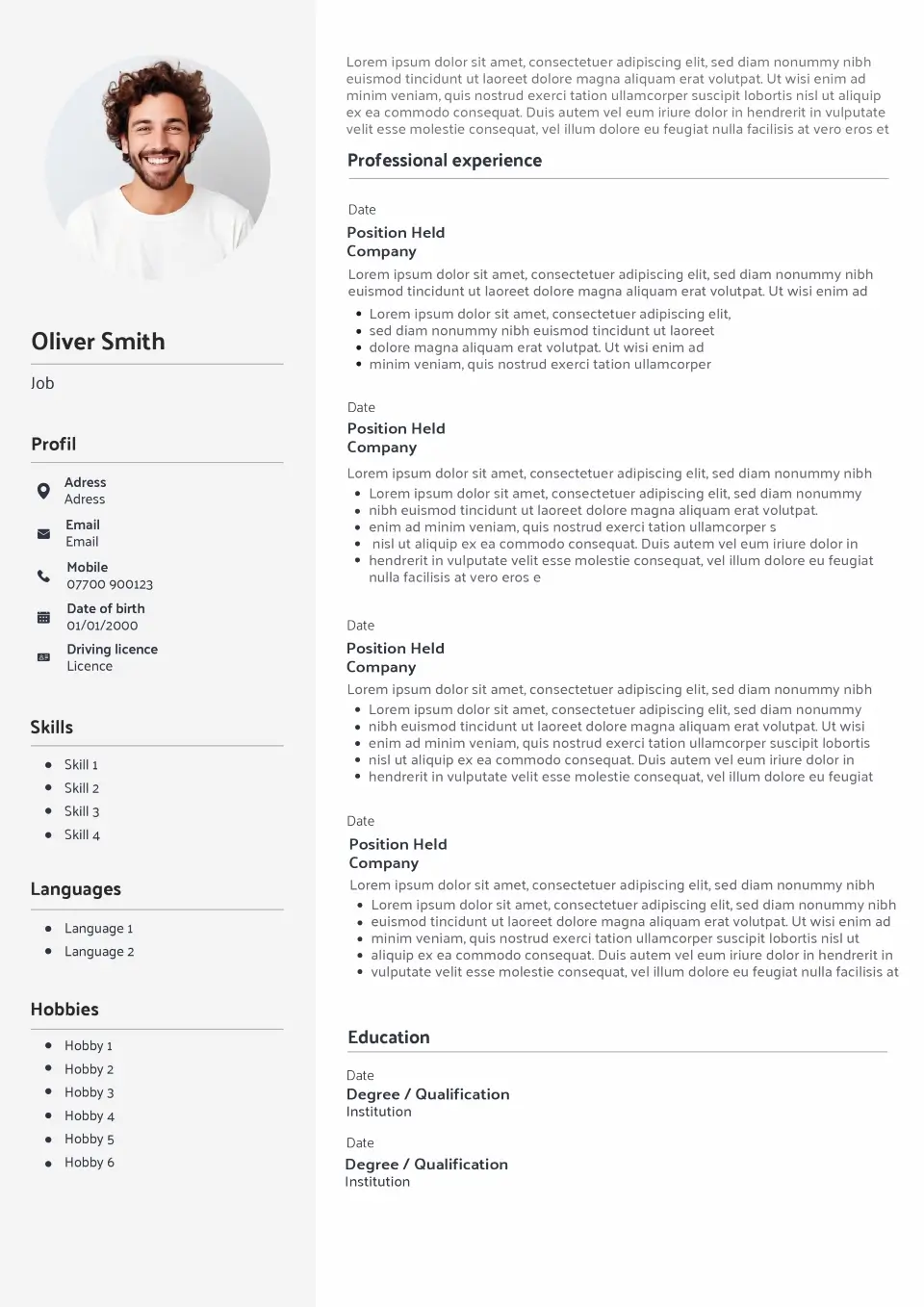
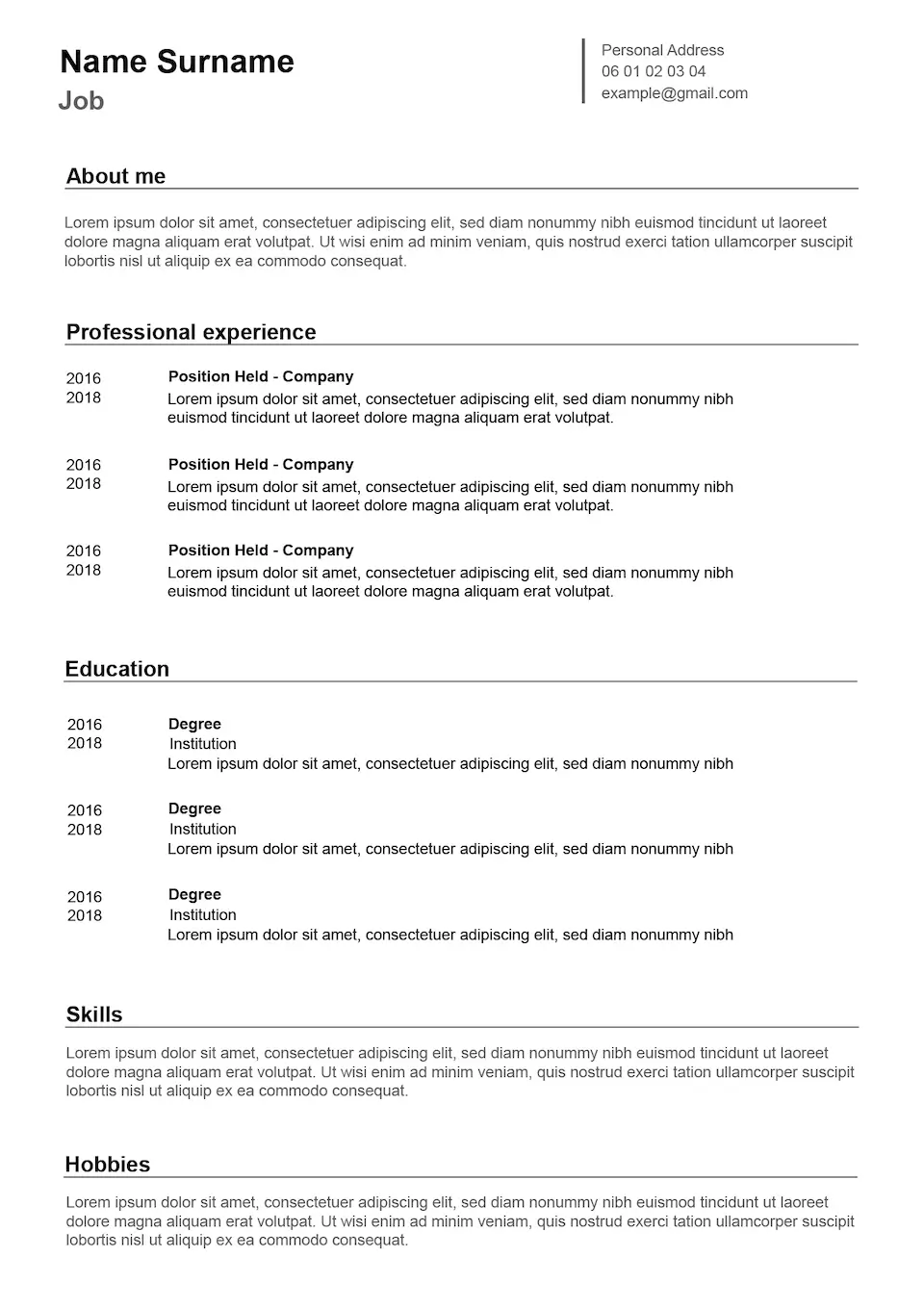
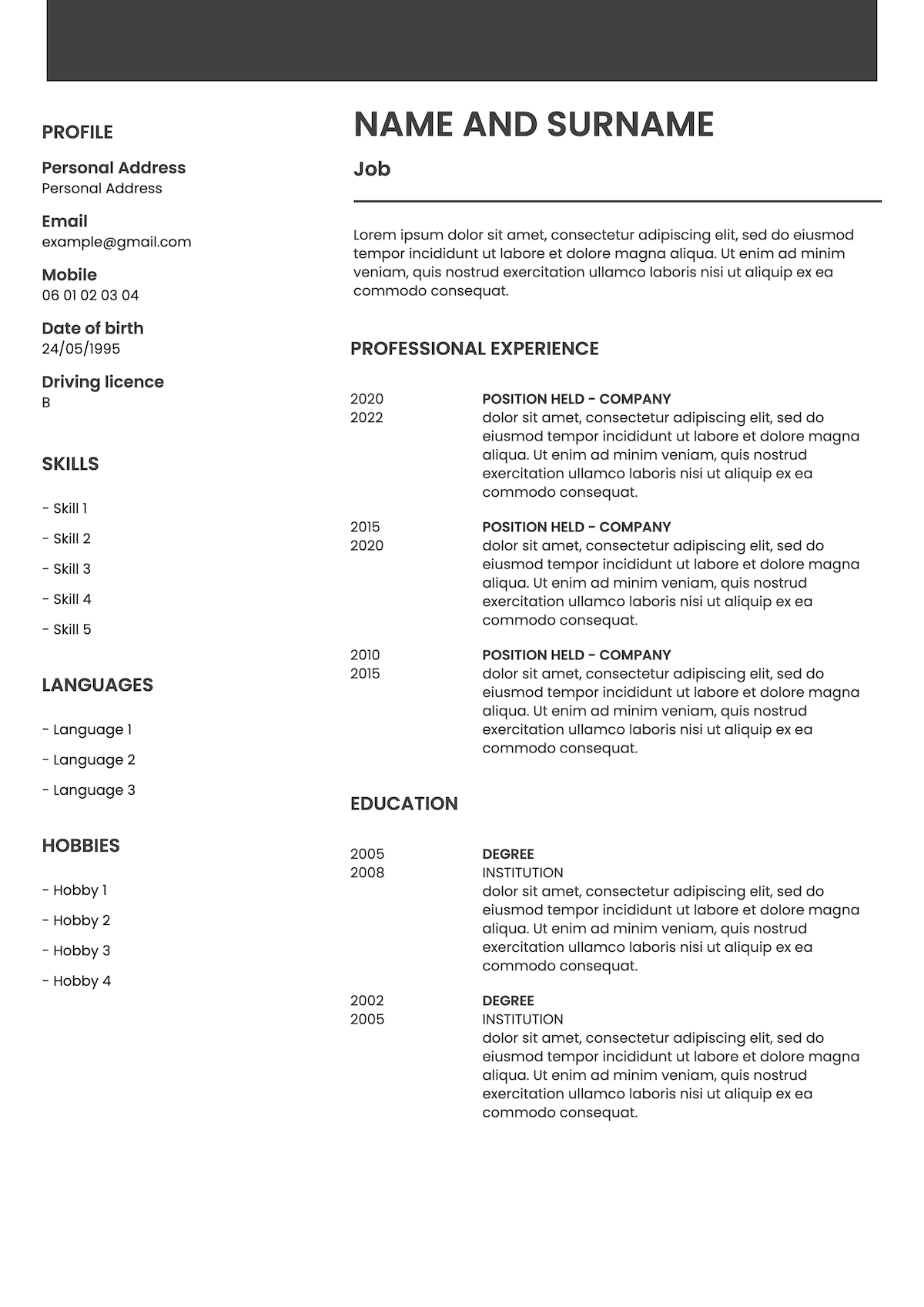
Traditional CV styles
Professional presentation
Easy to customise
Free to start
Classic CV Template Collection
Classic CV templates, ready to customise
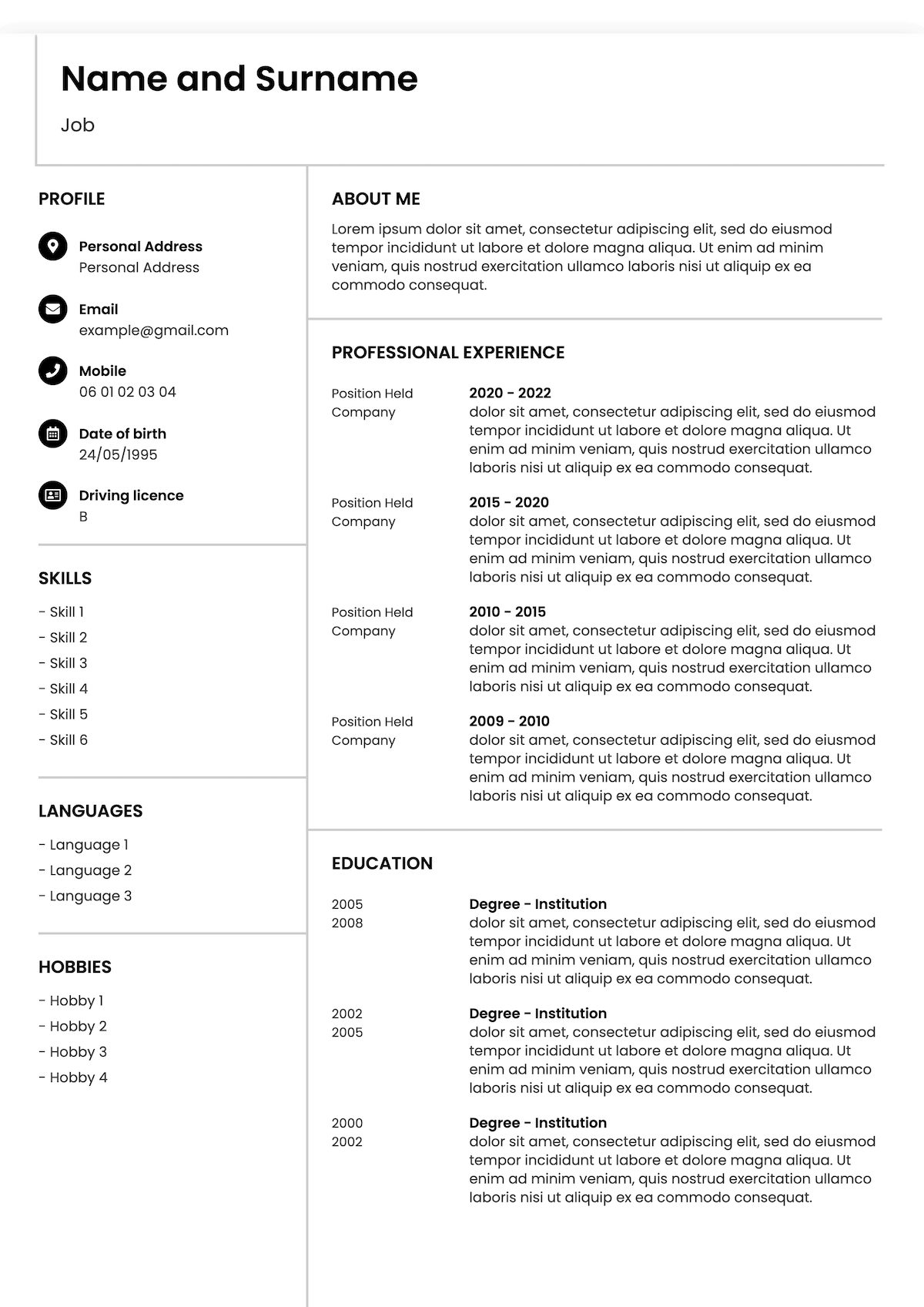
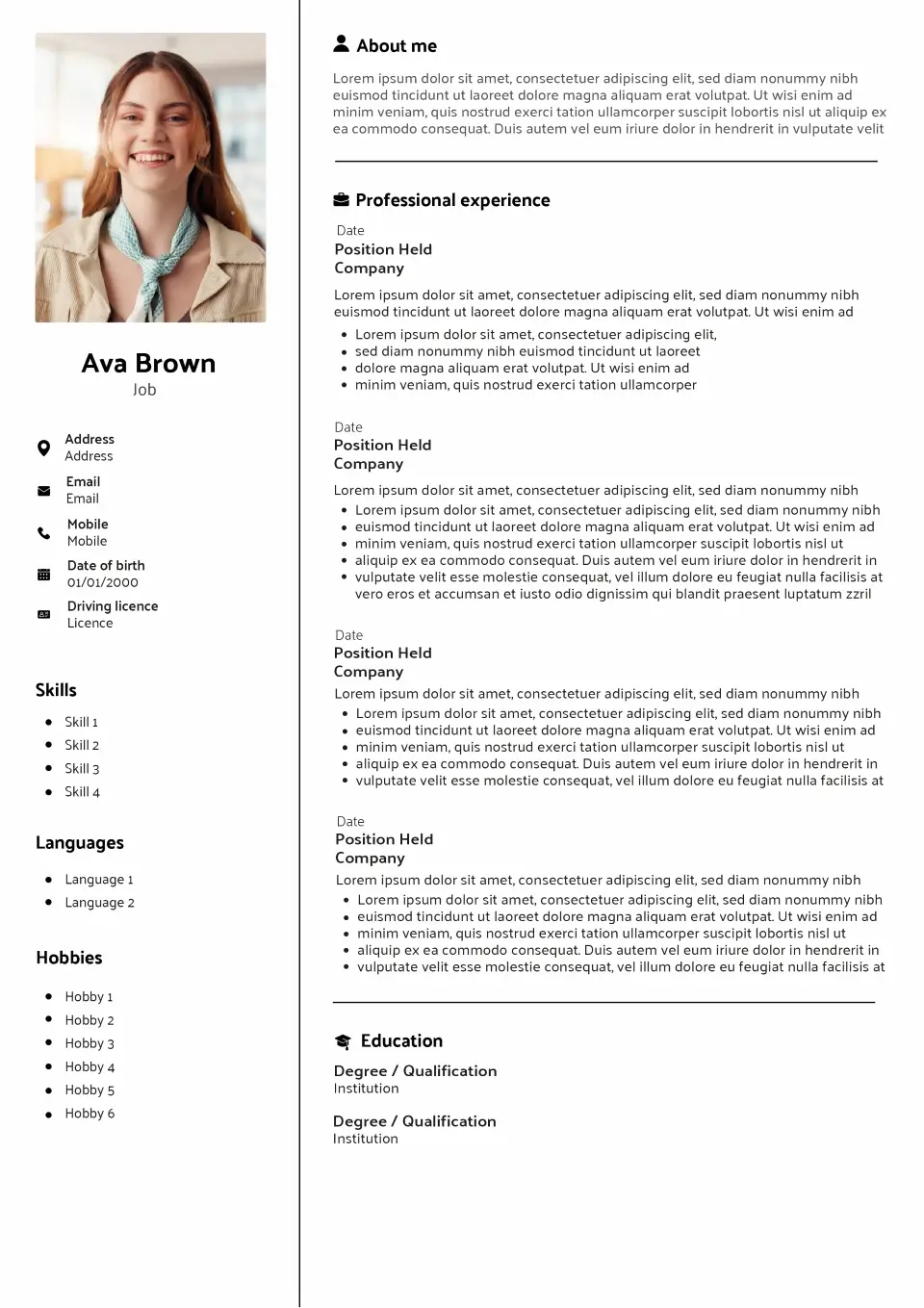
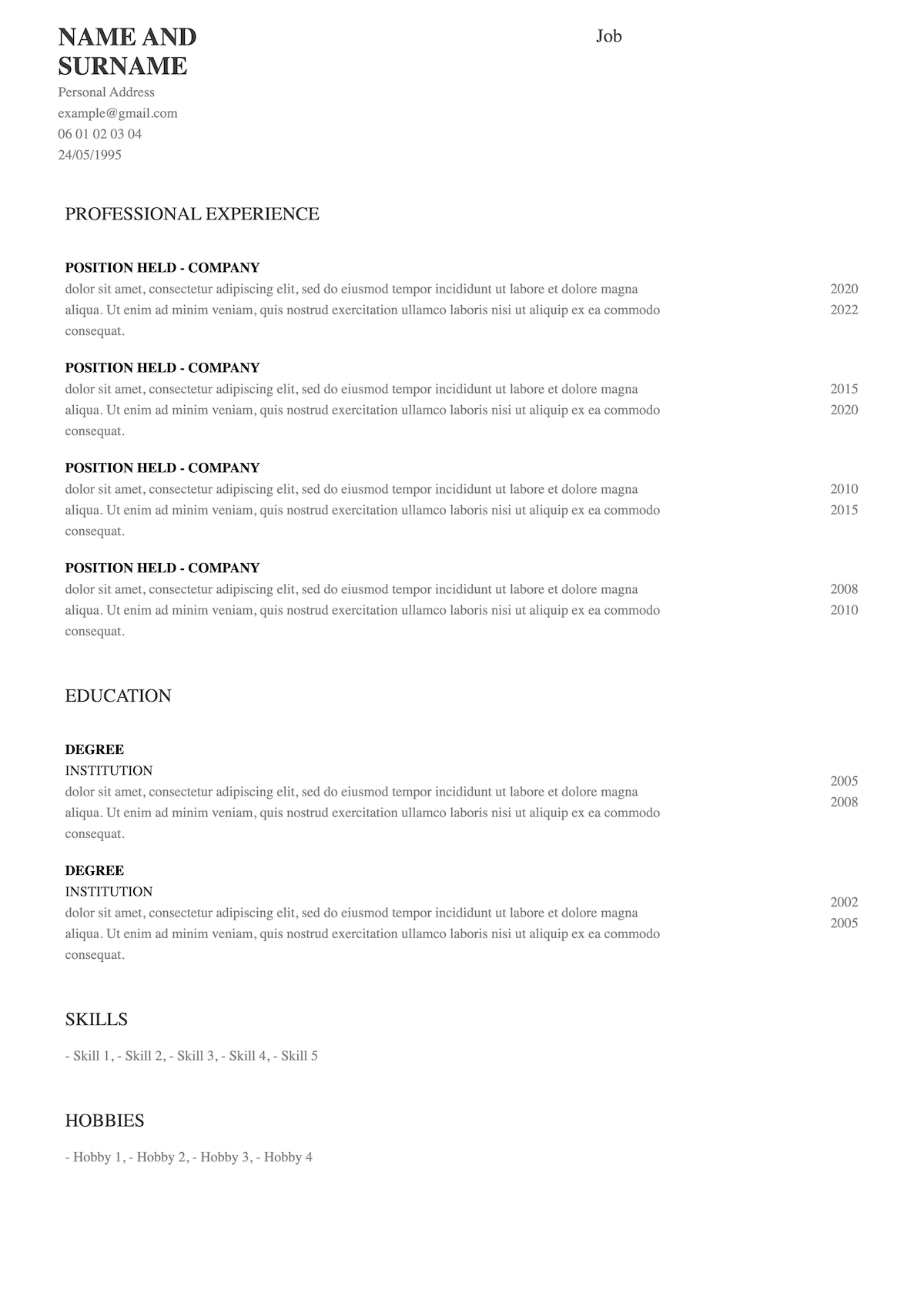
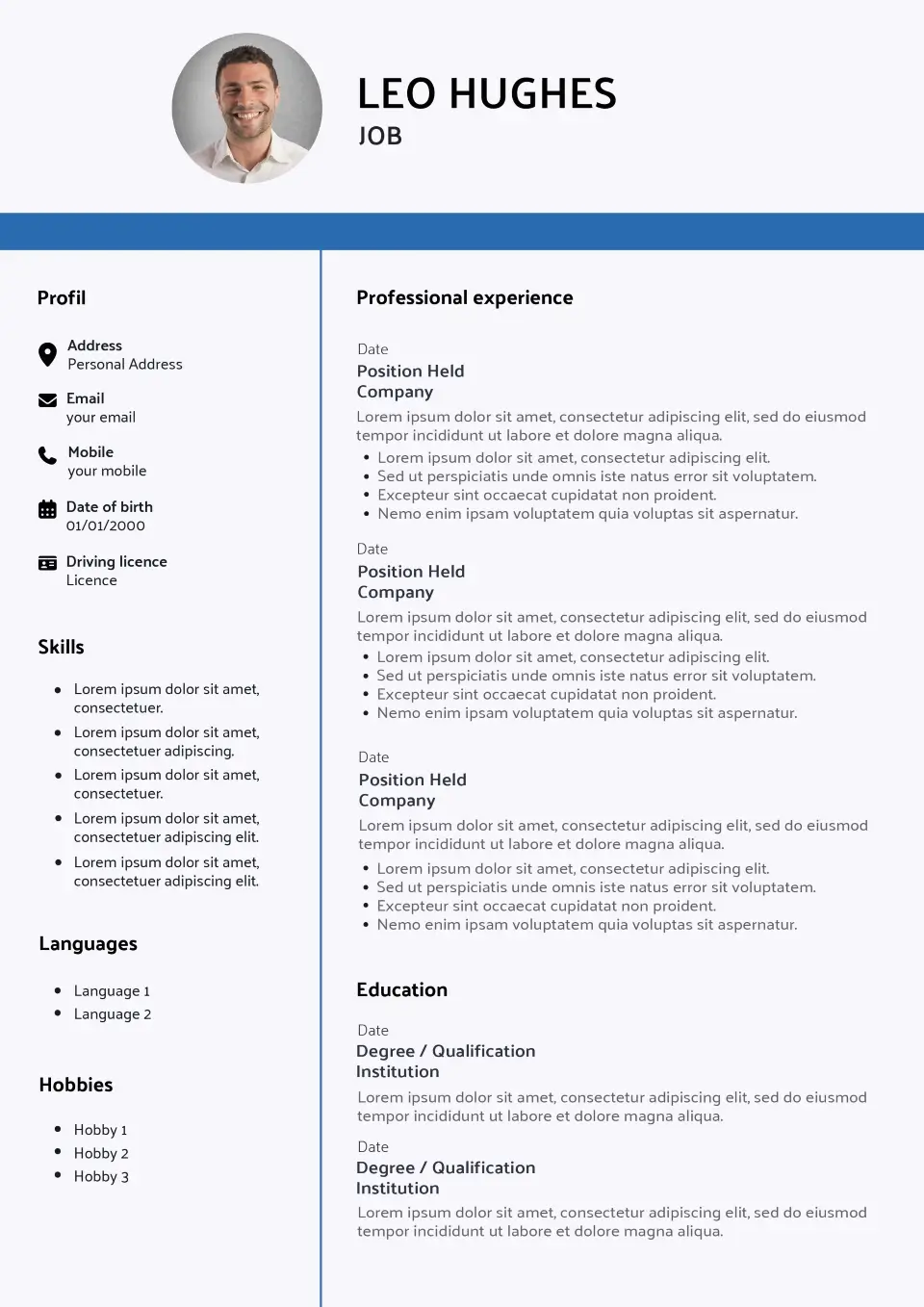
Explore our collection of classic CV templates for candidates who prefer an established, professional presentation. These templates use familiar sections and a conventional approach to presenting your career, making your qualifications and experience straightforward for recruiters to review.
Choose a template below, add your information and personalise the available options to create a CV appropriate for your experience, profession and next application.
- All
- Without picture
- Classic
- Modern
- Design
-
All CV template categories
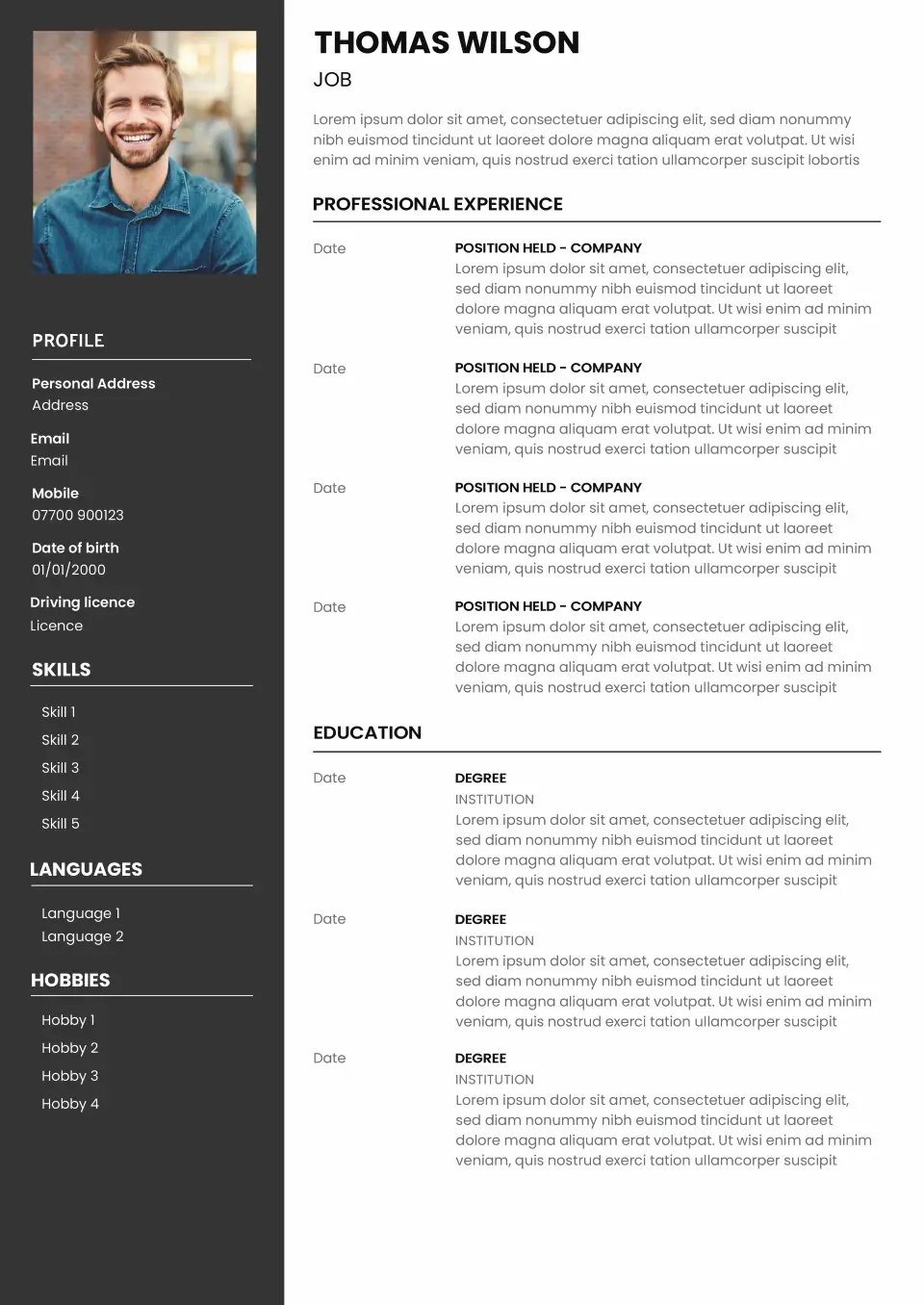
A proven approach
Why choose a classic CV template?
A classic CV follows conventions employers already recognise. Rather than trying to reinvent the document, it gives your career history a professional framework that works particularly well when experience, qualifications and credibility need to take centre stage.
Professional by nature
A traditional presentation creates a formal, business-like impression without relying on visual trends that may change over time.
A timeless approach
Classic CVs rely on established conventions rather than current visual trends, making them a dependable choice across different stages of your career.
A familiar structure
Recruiters can quickly recognise your profile, employment history, education and skills because the information appears where they would normally expect to find it.
Suited to traditional sectors
A classic CV is particularly at home in established professional environments where a conventional application may be more appropriate than a highly expressive one.
Classic CV Examples
See classic CV examples for different career profiles
Classic CVs work particularly well when your professional history needs to be presented in a familiar, established format. Explore three classic CV examples to see how the emphasis can change depending on your career situation.
Charlotte Evans
Financial Accountant
Qualified Financial Accountant with 7 years’ experience across financial reporting, month-end processes and management accounts. ACCA qualified with strong technical knowledge and experience improving reporting accuracy, supporting audits and providing financial information to senior stakeholders.
Work Experience
Financial Accountant
Harrison & Cole, Birmingham
- Prepare monthly management accounts and financial reports for three business units
- Manage balance sheet reconciliations, accruals and month-end reporting processes
Assistant Accountant
Turner Group, Birmingham
- Supported preparation of monthly accounts, budgets and financial reports
- Maintained accurate ledger records and completed regular account reconciliations
Education
ACCA Qualification
Association of Chartered Certified Accountants
BSc (Hons) Accounting and Finance
University of Birmingham
Key Skills
- Financial reporting
- Management accounts
- Budgeting
- Financial analysis
- Microsoft Excel
- Audit support
Interests
- Running
- Reading
- Volunteering
James Richardson
Commercial Director
Commercial Director with 16 years’ experience developing growth strategies, leading commercial teams and managing major client relationships across B2B services. Proven record of increasing revenue, improving commercial performance and building long-term partnerships at board and senior stakeholder level.
Work Experience
Commercial Director
Wellington Services Group, London
- Lead commercial strategy across a £28m UK business and report directly to the Managing Director
- Manage sales, account management and business development teams across three locations
- Delivered 31% revenue growth over four years through new business and strategic account development
Head of Business Development
Marshall & Partners, London
- Led a team of eight business development professionals across UK corporate accounts
- Developed sector-specific growth plans and managed major tender opportunities
Education
MBA
University of Warwick
Key Skills
- Commercial strategy
- Business development
- Leadership
- Revenue growth
- Key account management
- Negotiation
Interests
- Mentoring
- Golf
- Travel
Helen Foster
Office Administrator
Experienced administrator returning to the workplace after a planned career break. Brings 8 years’ previous experience supporting office operations, coordinating diaries and maintaining accurate records in professional services environments. Organised, dependable and confident using Microsoft Office and managing competing priorities.
Work Experience
Career Break
Family responsibilities
- Planned career break for family responsibilities
- Maintained digital skills and recently completed refresher training in Microsoft Excel
- Now available to return to a full-time administrative position
Office Administrator
Bennett Legal Services, Leeds
- Managed diaries, appointments and meeting arrangements for a team of six solicitors
- Prepared correspondence, maintained client records and processed confidential documentation
- Coordinated office supplies, invoices and general administrative processes
Education
Level 3 Diploma in Business Administration
Leeds City College
Key Skills
- Office administration
- Diary management
- Microsoft Office
- Document preparation
- Record keeping
- Customer service
Interests
- Reading
- Local volunteering
- Walking
A classic CV can adapt to very different career histories. An experienced professional can give recent responsibilities and technical expertise greater prominence, a senior candidate can focus on leadership and commercial impact, while someone returning to work can present a career break clearly without allowing it to overshadow their previous experience.
Built on familiar conventions
What makes a CV classic?
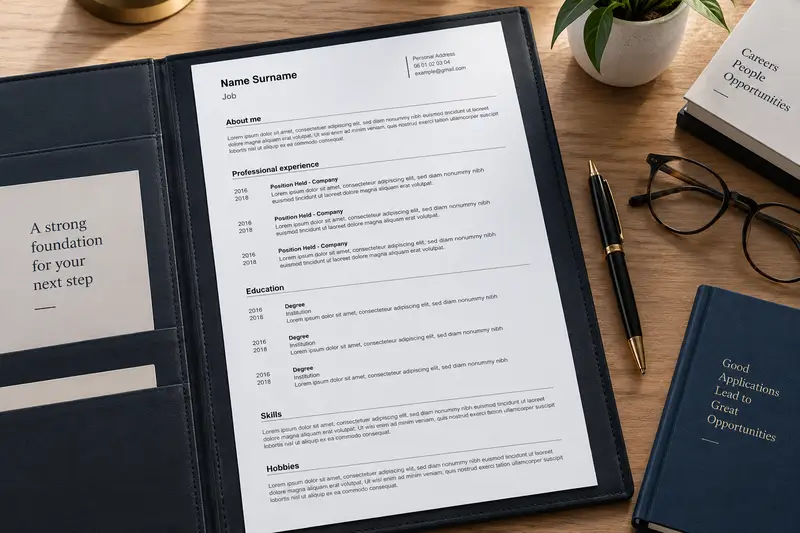
A classic CV follows an established approach to presenting professional experience. Instead of relying on visual trends, it uses familiar sections and a conventional hierarchy that recruiters can understand immediately.
Employment history usually plays a central role, particularly for experienced candidates. Recent positions receive the most detail, dates and employers are clearly identified, and career progression is easy to follow.
The result should feel professional and dependable rather than old-fashioned. A classic CV can still use polished typography and carefully balanced formatting; its defining characteristic is that presentation supports established CV conventions rather than trying to reinvent them.
- Traditional structure
- Familiar sections
- Career-focused
- Timeless presentation
A trusted professional format
Who should use a classic CV template?
Classic CVs can work at any career stage, but they are particularly useful when professional experience, qualifications and career progression are central to the employer’s decision.
Experienced professionals
A traditional structure gives established candidates plenty of room to show career progression, responsibilities and achievements without distracting from the substance of their experience.
Managers & senior candidates
For senior applications, a classic CV provides a credible framework for presenting leadership scope, business results and progression through increasingly responsible positions.
Traditional professions
Fields such as finance, law, administration, public services and other established professional environments often suit a conventional CV presentation particularly well.
Returning to work
A familiar chronological structure can help returning candidates explain a career break clearly while bringing previous professional experience back to the centre of the application.
Classic CV format
How to structure a classic CV
A traditional CV works because the recruiter already understands its structure. Rather than experimenting with the order of information, use familiar sections and make the hierarchy of your career easy to follow.
Contact details
Start with your name and essential contact information. For UK applications, a professional email address, phone number and general location are normally sufficient, with a relevant LinkedIn profile where useful.
Professional profile
Use a short opening profile to establish your level of experience, professional background and the strengths most relevant to the role. Avoid generic descriptions that could apply to any candidate.
Work experience
Present your employment history in reverse chronological order, beginning with your current or most recent position. Clearly identify your job title, employer and dates, then use concise points to show responsibilities and achievements.
Education & qualifications
List relevant degrees, professional qualifications and certifications. As your career develops, professional experience will usually deserve more space than older academic results.
Relevant skills
Include skills that help demonstrate your suitability for the vacancy. Prioritise technical, professional or role-specific abilities rather than filling the section with broad qualities that aren’t supported elsewhere in the CV.
Find your style
Compare classic CV templates with other styles
Classic CVs prioritise established professional conventions, but a different approach may suit your application. Compare the main characteristics before choosing your template.
| Classic This page | Modern View templates | Simple View templates | Creative View templates | |
|---|---|---|---|---|
| Overall feel | Traditional | Contemporary | Straightforward | Expressive |
| Structure | Conventional | Familiar | Streamlined | More flexible |
| Career history | Strong emphasis | Strong emphasis | Strong emphasis | Clear emphasis |
| Traditional sectors | Particularly suited | Well suited | Well suited | Consider context |
| Particularly suited | Well suited | Well suited | Depends on role | |
| Visual personality | Restrained | Moderate | Restrained | Strong |
| Familiar to recruiters | Very | Very | Yes | Depends on template |
ATS compatibility
Can classic CV templates be ATS-friendly?
A classic CV can provide a good foundation for applications submitted through an Applicant Tracking System because its structure usually relies on familiar sections and a logical career history.
Keep important information as readable text, use recognisable headings and make the order of your employment history straightforward. Avoid relying on visual elements alone to communicate dates, skills or other information that matters to the application.
No template can guarantee that you will pass ATS screening. The relevance of your experience, skills and terminology to the vacancy remains just as important as the document’s structure.
Recognisable headings
Standard headings such as Work Experience, Education and Skills make the purpose of each section immediately clear.
Clear career history
A reverse-chronological employment history provides an understandable sequence from your latest position through your earlier experience.
Readable information
Keep essential experience, qualifications and skills as text rather than communicating important details through graphics alone.
Tailored content
Adapt your CV to each vacancy by prioritising experience and skills that genuinely correspond to the employer’s requirements.
How it works
Create a classic CV in four steps
Start with a professional template and build your CV online without having to format the document from scratch.
Choose a classic template
Browse our classic CV templates and choose a professional format that suits your career and the role you’re targeting.
Add your information
Enter your profile, work experience, education and skills, or import an existing CV to save time.
Tailor your application
Prioritise relevant experience, strengthen your achievements and use the available customisation options to personalise the document.
Download as PDF
Review your CV carefully and download the finished document as a PDF when you’re ready to apply.
Classic CVs in the UK
What should a traditional UK CV include?
A classic UK CV usually follows a familiar sequence: contact details, a concise professional profile, employment history, education and relevant skills. Additional sections such as professional qualifications, languages or memberships can be included when they strengthen the application.
For candidates with an established career, work experience normally deserves the greatest attention. List positions in reverse chronological order and make your progression easy to understand. Recent roles can include more detail, while older or less relevant positions can usually be summarised.
A traditional CV doesn’t mean including outdated personal information. For most UK applications, you don’t need to provide your date of birth, marital status or a photograph. If you want a template built around this approach, browse our CV templates without a picture.
Qualifications remain particularly important in regulated or specialist professions. Include relevant degrees, professional certifications and memberships where employers expect them, but avoid allowing old academic information to take attention away from substantial professional experience.
Finally, traditional shouldn’t mean generic. Even with a classic format, tailor your profile, experience and skills to the vacancy. The structure may be conventional, but the evidence you provide should be specific to your own career.
Explore more CV resources
FAQ